The Billboard Is Dead. Here's What Replaced It.
Real estate marketing used to be about placement. The rules have changed, and the agents who understand that are pulling ahead.
share
Date Published
4/28/2026
Illustration
1971 Chevrolet billboard. Back when the highway was the algorithm.
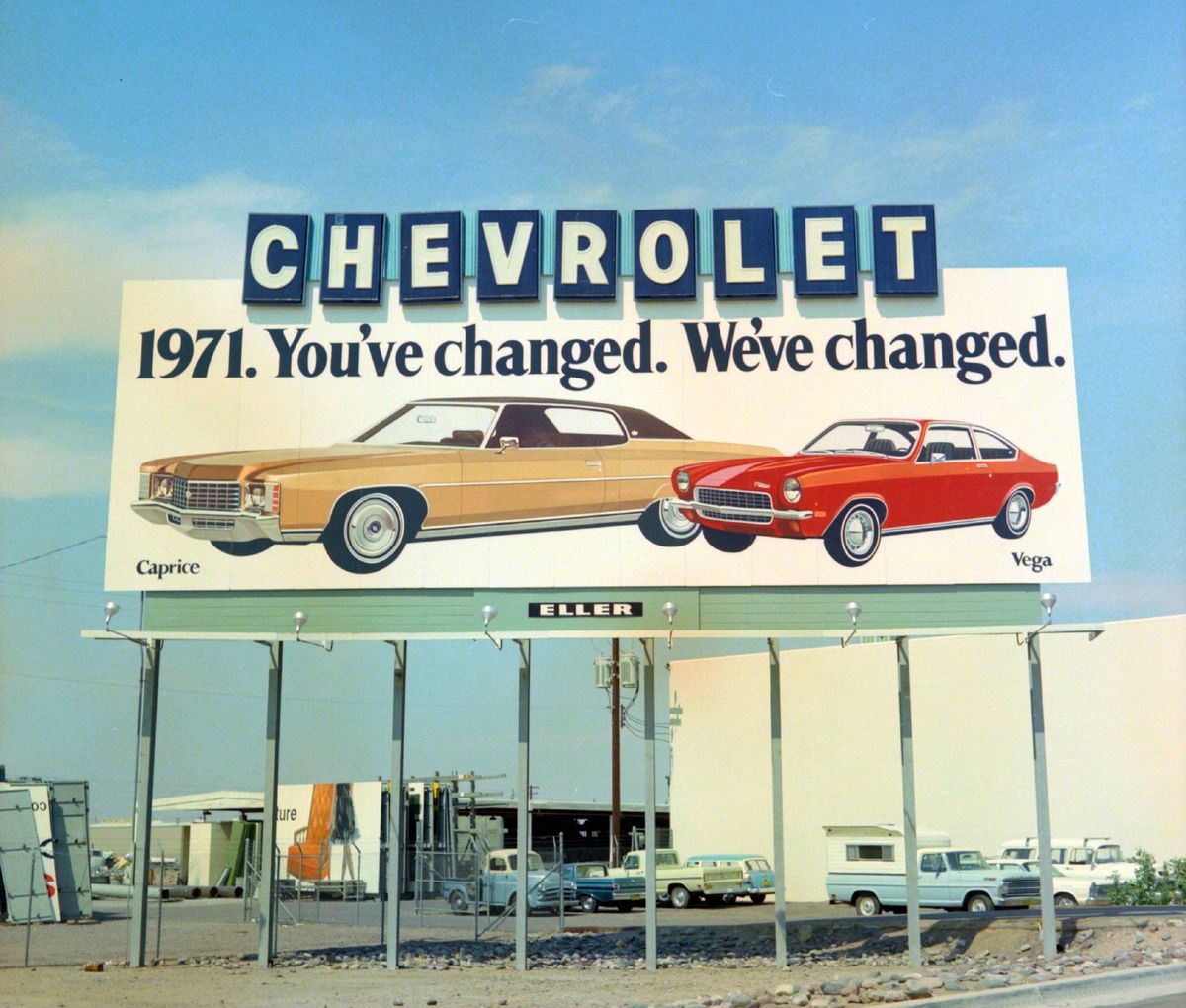
For most of the last few decades, real estate marketing operated on a simple principle: be visible in the physical world and the business would follow. Your face on a bus bench, your name on a yard sign, a billboard on the highway that people drove every day. The logic was straightforward. Repetition creates familiarity, and familiarity creates trust. It worked because there was no better option.
That era is over. Not because people stopped noticing things, but because where they look has fundamentally shifted.
The average buyer today does not make a decision about which agent to call based on what they saw on the side of a road. They make it on a screen, usually a phone, usually within a few minutes of starting their search. They type something into Google, look at who appears, scan reviews. They click on a profile or they don't. By the time they pick up the phone, the decision is already close to made.
This is where the billboard analogy breaks down completely. A billboard is passive. It sits in one place and waits for the right person to drive by at the right moment. Digital presence is different. When someone searches for an agent in your market at any hour of any day, your Google Business Profile either shows up or it doesn't. It either looks credible or it doesn't. That moment is not random, but something you can control, build toward, and compound over time.
The agents who figured this out early are not doing anything complicated. They are managing their online presence the way previous generations managed their physical one: with consistency, intention, and an understanding that visibility requires maintenance. Reviews are coming in regularly, profiles are active and updated, and the signals Google uses to determine relevance are being fed consistently. At Ashford South, this is exactly what we build for agents. We handle the profile optimization, the citation consistency, the review systems, the local content, and the ongoing adjustments that keep visibility strong as Google's algorithm evolves. The result is a presence that works every day without requiring the agent to be anywhere in particular.
What made the billboard valuable was its reach. A lot of people saw it whether they were looking for an agent or not. What makes digital presence more valuable is intent. The people finding you through search are already looking. They already have a need. They are already in the decision-making window. That combination of reach and intent is something no bus bench ever offered.
The infrastructure has changed. The principle has not. You still need to be where people are looking, at the moment they are looking. That place is just different now, and the agents treating their digital presence like a one-time setup instead of an ongoing asset are losing ground to the ones who treat it like the new billboard it is.